Master Customer Journey Mapping with Ease: A Beginner’s Guide
Why do some businesses consistently attract loyal customers while others struggle to retain them? The answer often lies in the experiences customers have at every stage of their relationship with a brand. This is where customer journey mapping becomes valuable.
Customers interact with businesses through websites, social media, advertisements, physical stores, customer service teams, emails, and many other touchpoints. When these interactions are convenient and consistent, customers are more likely to trust the business, complete purchases, and return.

However, confusing processes, delayed responses, and poor after-sales support can quickly damage customer relationships. Whether you operate a small business, manage a marketing team, or work in customer experience, learning how to create a customer journey map can help you make better customer-focused decisions.
Mapping your customers’ journey helps you to understand the complete experience customers have when discovering, evaluating, purchasing, and using their products or services. It reveals what customers do, think, and feel at different stages, allowing businesses to identify problems and improve their experiences.
Master Customer Journey Mapping with Ease: A Beginner’s Guide
In this episode of the Customer Connect Series, you will discover what customer journey mapping means, why it matters, the essential elements of a journey map, and the practical steps for creating your first map.
What is customer journey mapping?
Customer journey mapping is the process of visually representing the steps customers take when interacting with a business to achieve a particular goal. It is a narrative of their experience, tracing their path from the very first moment they realize they have a problem to the moment they become a loyal advocate for your business.
These steps may begin when a customer first discovers a brand and continue through product research, purchasing, delivery, product use, customer support, and repeat purchases.
A customer journey map is the visual document produced through this process. It typically identifies the stages customers move through, their actions, the channels they use, their emotions, their challenges, and opportunities for improvement.
For example, consider someone purchasing a laptop from an electronics retailer. The customer might discover the retailer through a social media advertisement, compare laptop specifications on its website, contact customer support, complete an online purchase, receive the product, and later request technical assistance.
Mapping this journey helps the retailer understand the entire experience rather than examining each interaction separately.
Customer Journey Mapping vs. Customer Experience Mapping
Although these terms are related, they can have slightly different emphases. Customer journey mapping generally focuses on the sequence of interactions customers have with a business while trying to accomplish a goal. Customer experience mapping often takes a broader view of the customer’s perceptions and experiences across those interactions.
Both approaches help organizations understand customers more deeply and identify ways to improve satisfaction.
Why is customer journey mapping important?
Customer journey mapping provides a structured way to understand customer expectations and improve business performance. Here are five important benefits.
1. Helps identify customer pain points.
A pain point is a problem, frustration, or obstacle that makes an interaction difficult for a customer. Examples include complicated checkout processes, unclear pricing, slow delivery, confusing product information, and delayed responses to complaints.
A journey map helps businesses locate these problems and determine where improvements are most necessary.
2. Improves customer satisfaction
Customers appreciate experiences that are convenient, reliable, and consistent. By understanding customer needs at different stages, businesses can remove unnecessary steps, provide relevant information, and make interactions easier.
For example, an online retailer could reduce customer frustration by providing clear delivery estimates and automatic order updates.
3. Supports customer retention and loyalty
Customer relationships do not end when a transaction is completed. Product onboarding, technical support, returns, and follow-up communication can influence whether customers purchase again. Journey mapping helps businesses identify opportunities to maintain relationships after the initial sale, encouraging repeat purchases and positive recommendations.
4. Aligns marketing, sales, and customer service
Customers often interact with several departments before and after purchasing. If these departments operate independently, customers may receive inconsistent information or have to repeat themselves.
A shared journey map gives teams a common understanding of the customer experience and helps them coordinate their activities.
5. Supports data-driven decisions
Businesses can combine journey mapping with customer feedback, website analytics, sales data, and service records.
Instead of guessing what customers need, teams can use evidence to identify recurring problems, prioritize improvements, and measure the results.
What are the five main customer journey stages?
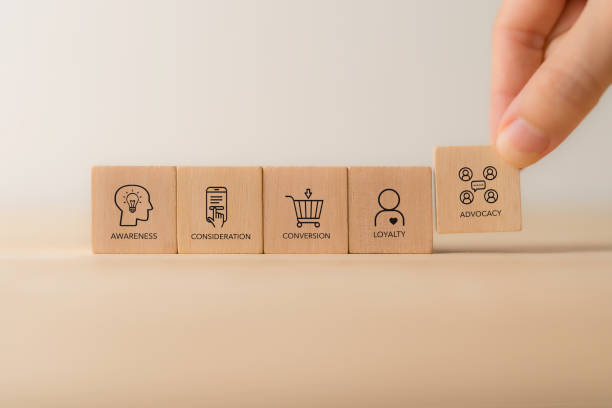
The customer journey varies by industry and business model, but five common stages provide a useful starting point.
1. Awareness
At this stage, customers discover a brand, product, or service. They may encounter social media content, search engine results, recommendations, or advertisements.
Business opportunity: Create relevant content, communicate a clear value proposition, and make the brand easy to discover.
2. Consideration
Customers compare available options, evaluate prices, read reviews, and assess whether a product meets their needs.
Business opportunity: Provide accurate product descriptions, transparent pricing, demonstrations, customer reviews, and helpful answers to common questions.
3. Purchase
The customer decides to buy and completes the transaction. This may happen online, in a physical store, or through a sales representative.
Business opportunity: Simplify checkout, provide secure payment options, explain delivery arrangements, and remove unnecessary purchasing barriers.
4. Retention and post-purchase experience
After purchasing, customers evaluate the product, delivery, support, and overall value they receive.
Business opportunity: Offer useful onboarding, responsive support, clear return policies, and relevant follow-up communication.
5. Loyalty and Advocacy
Satisfied customers may make repeat purchases, recommend the business, leave positive reviews, or refer other customers.
Business opportunity: Reward loyalty appropriately, request feedback, resolve problems quickly, and make it easy for customers to share their experiences.
Not every customer follows these stages in a straight line. Some may return to earlier stages, abandon a purchase, or move between online and offline channels. Your map should reflect the actual customer journey rather than assume everyone behaves identically.
What should a customer journey map include?
A useful customer journey map contains several essential elements.
- Customer persona: A research-informed representation of the customer group whose journey you are mapping.
- Journey stages: The main phases customers pass through while pursuing a specific goal.
- Customer actions: What customers do at each stage, such as searching online, comparing prices, or contacting support.
- Touchpoints and channels: Where interactions occur, including websites, mobile applications, social media, physical stores, email, and telephone support.
- Customer thoughts and emotions: What customers may expect, worry about, or feel during each interaction.
- Pain points: Obstacles, frustrations, and unmet needs.
- Opportunities: Changes that could make the experience easier, more relevant, or more satisfying.
- Performance metrics: Measures used to assess whether improvements are working.
These elements turn a simple sequence of interactions into a practical tool for customer experience management.
#Ads:
Let’s help you elevate your marketing activities digitally. We are an excellent digital marketing agency that provides top-notch services to businesses and organizations like yours. Message us on WhatsApp Now!

How to create a customer journey map in seven steps
You do not need an expensive software application to create your first customer journey map. A spreadsheet or diagram can be sufficient if the map is based on reliable information.
Step 1: Define your objective
Start by deciding what you want to understand or improve. Are you investigating why customers abandon online purchases? Do you want to improve customer onboarding, reduce complaints, or increase repeat purchases? A clearly defined objective keeps your map focused.
Step 2: Identify your target customer
Choose the customer group whose experience you want to examine. Different customer groups may have different expectations, purchasing motivations, and barriers. Use customer interviews, surveys, sales records, and existing research to develop a realistic persona. Avoid relying entirely on assumptions. A useful persona reflects evidence about customer needs and behaviour.
Step 3: Gather customer data
Collect information about what customers actually experience.
Useful sources include:
- Customer interviews and surveys.
- Website and application analytics.
- Customer service conversations and complaints.
- Product reviews and social media comments.
- Sales and conversion reports.
- Customer satisfaction feedback.
Combining different data sources helps you distinguish recurring problems from isolated incidents.
Step 4: List the journey stages and touchpoints
Break the customer experience into stages, then identify the interactions that occur at each stage.
For example, an online shopping journey may include discovering a product through search, reviewing its specifications, adding it to a cart, making payment, receiving delivery, and requesting support. Include interactions across channels where relevant. A customer may discover a product on social media but complete the purchase in a physical store.
Step 5: Identify emotions and pain points
Consider what customers may think or feel during each interaction. Look for uncertainty, frustration, confidence, excitement, or disappointment.
Use customer feedback and behavioural evidence to validate these observations. Do not assume that every customer experiences the same emotions.
For example, a customer may hesitate at checkout because delivery fees are disclosed too late. The pain point is not simply the checkout page; it is the lack of cost transparency.
Step 6: Prioritize improvement opportunities
You may discover several problems, but not all deserve immediate attention.
Prioritize issues according to factors such as customer impact, frequency, business consequences, implementation cost, and feasibility.
For example, clarifying delivery charges may be a relatively simple change that addresses a frequent source of abandoned purchases. A complete website redesign may require more time and investment.
Step 7: Implement changes and measure results
Assign responsibility for improvements, establish timelines, and select suitable performance indicators. After implementing changes, monitor whether the customer experience improves. Gather further feedback and update the map when customer behaviour, business processes, or technology changes.
Remember: Customer journey mapping is an ongoing improvement process, not a one-time exercise.
What tools can you use for customer journey mapping?
Beginners can create a customer journey map using simple, accessible tools.
- Microsoft Excel or Google Sheets: Useful for organizing stages, touchpoints, pain points, responsibilities, and metrics in a table.
- Miro: Useful for collaborative workshops and visual journey maps.
- Lucidchart: Helpful for creating structured diagrams and process flows.
- Canva: Suitable for presenting journey maps in a visually engaging format.
- CRM and analytics platforms: Useful for understanding customer interactions, behaviour, feedback, and conversion patterns.
Choose a tool based on your objectives, team size, budget, and data requirements. The quality of your customer insights matters more than the sophistication of the software.
Common customer journey mapping mistakes to avoid
Even a well-designed map can be ineffective if it is not grounded in evidence or connected to action.
Relying on assumptions: Validate customer needs and emotions through research rather than internal opinions alone.
Ignoring the post-purchase experience: Include delivery, product use, returns, complaints, and customer support—not just the buying process.
Overlooking different channels: Consider how customers move between websites, social media, physical locations, and customer service.
Trying to map every customer at once: Begin with a specific customer segment and objective, then expand as needed.
Failing to assign responsibility: Identify who will implement each improvement and when it should happen.
Never updating the map: Review the journey as customer expectations, products, technologies, and business processes evolve.
Avoiding these mistakes helps turn the map into an actionable customer experience tool rather than a document that sits unused.
How do you measure the success of customer journey mapping?
Customer journey mapping should lead to measurable improvements. Select metrics that match the problem you are trying to solve.
- Customer Satisfaction Score (CSAT): Measures how satisfied customers are with a particular interaction or experience.
- Net Promoter Score (NPS): Measures customers’ willingness to recommend a business, usually using a 0–10 recommendation question.
- Customer Effort Score (CES): Assesses how easy or difficult customers find completing a task.
- Conversion rate: Measures the proportion of relevant visitors or prospects who complete a desired action.
- Customer retention rate: Measures the proportion of customers retained over a defined period.
- Customer churn rate: Measures the proportion of customers lost over a defined period.
- First Contact Resolution (FCR): Tracks the proportion of customer issues resolved during the initial contact, according to the business’s chosen definition.
For example, if a retailer simplifies checkout, it could compare checkout conversion and cart abandonment before and after the change. It should also account for other factors that might influence the results.
Use a baseline, set a target, and review performance consistently. No single metric captures the entire customer experience, so combine behavioural measures with customer feedback where possible.
Frequently asked questions about customer journey mapping
What is the main purpose of customer journey mapping?
The main purpose is to understand how customers interact with a business, identify barriers and unmet needs, and improve the experience across important touchpoints.
What are the five stages of a customer journey?
Five common stages are awareness, consideration, purchase, retention or post-purchase experience, and loyalty or advocacy. The precise stages vary according to the business and customer goal.
How do beginners create a customer journey map?
Define a clear objective, select a customer segment, gather customer data, identify journey stages and touchpoints, document pain points, prioritize improvements, and measure the results.
What is the difference between a customer journey map and a customer journey?
A customer journey is the sequence of experiences a customer has while pursuing a goal. A customer journey map is a visual representation of that journey.
What is the best tool for customer journey mapping?
There is no single best tool for every business. Spreadsheets are useful for simple maps, while visual collaboration tools are helpful for workshops and more complex journeys.
How often should a customer journey map be updated?
Review the map regularly and whenever significant changes occur in customer behaviour, products, technology, or business processes. The appropriate review frequency depends on how quickly the journey changes.
Conclusion: Turn customer insights into better experiences
Customer journey mapping gives businesses a structured way to understand the experiences customers have before, during, and after purchasing. By identifying customer needs, touchpoints, emotions, and pain points, organizations can make more informed decisions about where to improve.
The process does not have to be complicated. Start with one customer segment, choose a specific objective, gather reliable information, and map the interactions that matter most. Then prioritize improvements, assign responsibility, and measure the outcomes.
Over time, this approach can help businesses reduce friction, strengthen customer relationships, and create more consistent experiences across channels.
Written & Edited By:
Arthur Kwame Philip
•••••••••••••••••••••••••••••••••••••••••••••••••••••••••••••
Digital Marketing || Cybersecurity || Entrepreneurship || Business || Management || Education